Emergency & community
New Braunfels CERT
What New Braunfels CERT is, what CERT Basic training covers, how to get involved, and my work with its Drone Team, exercises, EOC and Watch Tower duty.
New Braunfels CERT (NBCERT) is a volunteer Community Emergency Response Team sponsored by the City of New Braunfels Fire Department, and it works with the City of New Braunfels Police Department. The city started it in December 2010, after the June 2010 flood, to help the community prepare for and respond to disasters. It also works with Comal County, the Alamo Area Council of Governments and FEMA, and uses the Incident Command System. For current news, classes and contacts, see the team’s own site: newbraunfelscert.org.
My involvement
I’ve been a member since 2022. I take part in:
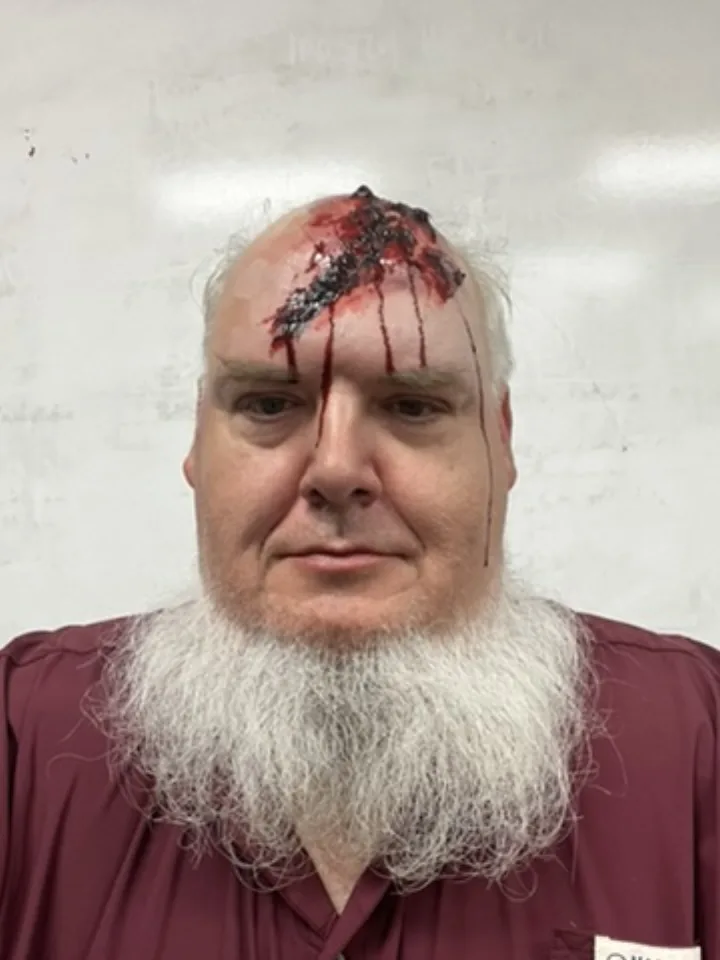
- Disaster exercises, including serving as a role-playing victim in moulage (the photo here).
- Drone Team: I work with the Drone Team, part of New Braunfels Search and Rescue. I’m studying for the FAA Part 107 remote pilot certificate.
- EOC duty: staffing the Emergency Operations Center.
- Watch Tower duty: monitoring for flooding and weather events and reporting to the City and County EOC. See EMCOMM.
- Community events: I’ve helped at events such as Día de los Muertos and Sängerfest.
- Logistics: the gear, supplies and planning that keep a team working.
CERT and amateur radio overlap a lot. When phones and internet fail, radio is often how teams and agencies keep talking. See EMCOMM and Air Force MARS.
What CERT volunteers do
- Respond when called for floods, fires and other disasters, and support planned city events.
- Help neighbors and protect themselves until professional help arrives.
- Size up damage and report it accurately to emergency management.
- Provide first aid, light search and rescue, and fire safety on small fires.
- Support shelters and community events, and staff logistics and radio roles.
- Train monthly, and take additional courses through TDEM, TEEX and FEMA.
CERT Basic training
NBCERT teaches the FEMA CERT Basic course. It is open to the public, and you do not have to join the team to take it. The team describes it as a 24-hour course offered several times a year, at no cost.
| Topic | What you learn |
|---|---|
| Disaster preparedness | Hazards in your area and getting ready |
| Disaster first aid | Treating life-threatening conditions and setting up medical treatment areas |
| Light search and rescue | Safe search methods |
| Fire safety | Fire hazards and putting out small fires |
| Disaster psychology | Stress for survivors and for responders |
| Terrorism awareness | Recognizing and reporting threats |
| Course exercise | A simulated disaster with role-playing victims |
Teens 13 and older are encouraged to take it with their families. Class dates change, so check the team’s blog and event pages for the next one.
Beyond the basics
- Search and Rescue (NBSAR): a volunteer team that is on call and trains in lost-person and wilderness search, rope rescue, navigation and radio communications. Applicants must be US citizens, 18 or older, hold a valid Texas Class C or higher driver’s license, have completed CERT Basic, and pass a background check.
- Drone / UAS Unit: part of NBSAR since December 2020, created with the New Braunfels Fire Department. FAA-certified pilots support fire, police and search operations.
- Other training: Stop the Bleed, CPR/AED and first aid, Red Cross shelter training, Skywarn, and large exercises such as the annual San Antonio mass casualty exercise.
- NBCERT Foundation: a 501(c)(3) that raises money for NBCERT and NBSAR training, supplies and equipment.
How to get involved
- Take CERT Basic. Watch newbraunfelscert.org for the next class.
- Use the contact page to ask about joining the team. It also lists phone numbers and the volunteer sign-in portal.
- Join the monthly training meetings and exercises, then look at specialty areas such as Search and Rescue, Drone, or radio support.
- Keep your own household ready. A CERT member is the help until help arrives, but only if their own family is safe first.
You can also follow the team on Facebook, Instagram and YouTube.
Personal go-kit
A short starting list. Adjust it for your role and your training.
- Water, food and any medications for several days
- Sturdy shoes, work gloves, a hard hat and safety glasses
- Headlamp or flashlight with spare batteries, and a whistle
- First-aid kit, dust masks and a multi-tool
- Weather-appropriate clothing, rain gear and a notepad with a pen
- Copies of key documents and a paper list of contacts
- A handheld radio, if you are licensed and your team uses one